
From bras to 3D printers, the factory where the industrial future is imagined
Davide Ardizzoia has introduced 3D printing in his underwear company, to print prototypes and individual parts. In a few months he passed passed to building also industrial 3D printers
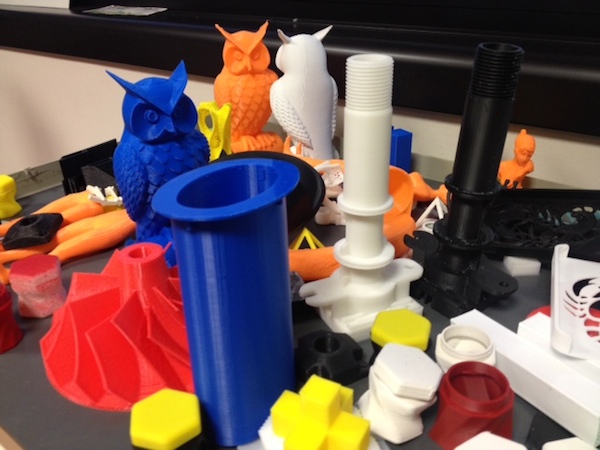 From production of wires for underwire bras to the creation of 3D printers capable of industrial work for companies. In "a journey" to discover the 3D revolution, we have arrived in Oleggio, in a shed in the industrial area north of the town in the province of Novara: we meet David Ardizzoia of JdealForm, family-run factory that has produced parts for bras since the 1950s. Ardizzoia has introduced 3D printing in his company, to revolutionise prototyping, but then became also a producer of 3D printers: today under the same warehouse it manufactures also 3D printers in high definition, suitable for industrial use.
“We make corsets and bras: a sector that demands either much labour or much automation; we have decided to dedicate ourselves to the second one” tells Ardizzoia Thanks to this technology ("we have more computers than employees", in a manufacturing environment) the family company (founded by his father) has remained on the market. Ardizzoia studied as a textile engineer, but in the 1980s he worked a lot with the new technologies, with computer graphics. That which was a passion, applied to the company, led them to introduce, as trailblazers, the 3D revolution in a company: "We started with rapid prototyping. It happened that we had to spend a lot for the prototype of a piece, and then find ourselves losing a job because the prototype arrived late. At that point, we thought that we should print it ourselves". Starting with the first moulded parts in 3D, with a fair amount of experimenting along the way, to overcome contingencies and limitations, thanks to the open source concept of many printers, "open" projects that can be modified and improved, also through comparison with other makers and enthusiasts. 3D printing enables us to produce more quickly, but also to achieve cost-effectively, parts that with normal moulding systems would require complicated workings. Using the dual extruder one can print with two different materials: "with one, the piece is printed, with the other, the supporting structure that supports it during processing. When you finish the piece, by immersing it in limonene the supporting structure dissolves and the piece is ready".
Read also: in the Future Electronics of Gallarate, 3Drag is born, the 3D printer for hobbyists
From the first examples created for internal business use, Ardizzoia switched to producing for others, under the brand name 3ntr. "We began from our knowledge of industrial automation: in January 2013 we created the first example, in November 2013 we started to sell them," he says, referring to a 3D printer that works with a "plate" in A4 format (21 x 29 cm). The plate defines the maximum size of the objects to be printed, now 3ntr is working on a model that works on a double A2, 42 cm by 59.4 cm, with a height of 50 cm (pictured). The industrial version printer is able to work with dimensions much greater than "normal" – so to speak – printers for hobbyists. The possible uses grow: “You can get to print large pieces, even a rim for bicycle wheels" says Luca Perencin of No Labs of Lonate Pozzolo, a consultant working for the research and development (pictured below, an open vase printed as a single piece).
"They were a great challenge because they force you to deal with pallets and special conditions" Ardizzoia explains. Meanwhile the company grows commercially too: "We sold about 20 units, other twenty are already sold on paper, another dozen of smaller machines”. Each printer with a plate in A4 format costs 3650 euro plus VAT, a highly competitive price if you compare it with other industrial machinery, production application is already a reality: "One of our customers is in Madagascar and makes shoes, they use the printer to create forms for the shoes, being able to create and adapt parts cheaply, without resorting to traditional prototypes”. The printers can work with plastics, resins, or layering other materials, such as chalk or even stone.
Read also: From "hobbyists" to manufactures, the 3D revolution
In this moment 3ntr, which is located in a wing of the "historical" company, has 2 printers in design, other 4 in production in the workshop, in an area close to the main warehouse. Some printer parts arise due to 3D printing, according to the idea of "self-replicating", with interesting implications on maintenance (parts can be printed directly). The ability to create pieces directly in the company is part of the 3D revolution, Ardizzoia makes one of his references: "We’ve also seen it as a way to bring back a bit of manufacturing in Italy, this is a great opportunity," he says, while he accompanies us around the workshop. Almost a revenge for those who decided to relocate or a way to give a new hope in Italy that has suffered competition from low-cost production in the East.



Dalla Home

Brezzo di Bedero
Getta nel lago Maggiore le macerie del cantiere di ristrutturazione: denunciato il proprietario di una casa a Brezzo di Bedero

Varese
A Varese nasce “In Mensa”: in via Dunant il progetto inclusivo con 10 ragazzi della cooperativa Siloam

Gallarate
Percepiva la Naspi ma aveva aperto una ditta edile: denunciato padroncino di Gallarate

Arsago Seprio
Fermato in auto a Besnate con hashish e marijuana, nella casa di Arsago Seprio ne nascondeva oltre un chilo e mezzo: arrestato un 43enne
La community di VareseNews
Loro ne fanno già parte
Ultimi commenti
lenny54 su Chiusura dell'accesso all'A8 da Largo Flaiano, il PD Varese: "Nessun preavviso, disagi intollerabili"
ccerfoglia su Torna Glocal: tra giornalismo tradizionale, scuola digitale e intelligenza artificiale
Bustocco-71 su Chiusura dell'accesso all'A8 da Largo Flaiano, il PD Varese: "Nessun preavviso, disagi intollerabili"
GrandeFratello su Chiusura dell'accesso all'A8 da Largo Flaiano, il PD Varese: "Nessun preavviso, disagi intollerabili"
Felice su Ventidue data center intorno a Saronno? I cittadini si organizzano e incontrano un esperto
lenny54 su Dal prato di Pontida Salvini chiama la Lega a raccolta: congresso straordinario a ottobre






Accedi o registrati per commentare questo articolo.
L'email è richiesta ma non verrà mostrata ai visitatori. Il contenuto di questo commento esprime il pensiero dell'autore e non rappresenta la linea editoriale di VareseNews.it, che rimane autonoma e indipendente. I messaggi inclusi nei commenti non sono testi giornalistici, ma post inviati dai singoli lettori che possono essere automaticamente pubblicati senza filtro preventivo. I commenti che includano uno o più link a siti esterni verranno rimossi in automatico dal sistema.