
The fox that learned to “walk on water”
There is a shortage of places for animals to cross; as a result, rivers and streams are being transformed into safe routes. But sometimes, adaptations are needed to guarantee a way through.
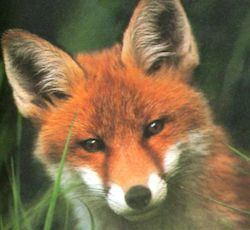 Four paws moving in the dark night, a pair of eyes turn red as they reflect the headlamps of cars approaching. Then a moment later, just the bare asphalt road, as the animal instinctively runs off, maybe to catch prey, or to feed its young. These could be the opening lines of a novel, or a children’s story, or even the first line of a tale destined to end immediately after, cut short by the wheels of a car. The characters in this story are foxes, hedgehogs, badgers, small rodents, and, as we shall see, even frogs and toads. These animals are local, and they need safe crossing places to go through. But there are other animals, mammals such as porcupines, considered "foreign"; about twenty years ago, they could be found in North Lazio, but now, they are moving north.
Even this small mammal, an unexpected guest found in these parts, invited here by climate change, even this animal, with its long spines, has to travel. In the case of the porcupine, its favourite highway, to move north, is the “Appennino”. Then, there is the River Po and the River Ticino, which they manage to swim across. Here, however, the risk is great, because sometimes the impact with the man makes every attempt to find shelter fruitless.
So, like the fox, and many other small animals to be found in Italy, a realm of biodiversity in danger, the porcupine must be helped.
The second stage of this trip (read here the project and the first stage), accompanied by the LifeTib projects, starts here, from the invisible points under the roads, under the asphalt, which allow the dominant species to drive quickly by, without noticing what is happening on the ground, except, in the morning light, when they see the silent carnage that has taken place.
VALLE LUNA – Stopping for a second by a small stream, a little more than a rivulet that flows down to the lake, means diving into a world that is unfamiliar but within easy reach. Sometimes, it just for a phone call or a cigarette, before getting back into the car, a stop for only a few minutes on the bank. We are in Schiranna, before a double roundabout where there is a bar, right on the bank of the river Valle Luna. The water is very shallow, but when it rises, it can be a problem for the animals that come down from the Campo dei Fiori, to take advantage of this natural passage to go from one place to another. The intervention of support and "defragmentation" of passages (which still has to be done) entails making the river "continuous", that is, allowing animals to transit by making one of the two banks higher than the other; by doing this, also when the river is full, a viable passage is available. In these cases, the alternative is crossing the road.
BARDELLO – Another example, this time in progress and almost complete, can be seen a short distance from the lake. It is below the level of the road, near the "new" bridge built along the main road, on the edge of Bardello and Gavirate. The river is the one that gives its name to the village of ice houses, not far from where we came across Ludwigia, the Asian weed, last week. But here we are in the middle of the river, which has already begun its journey from a few hundred metres away; after about ten kilometres, the Bardello dives into Lake Maggiore, in Bozza, in Besozzo. Along this stretch, the river provides an opportunity that no animal can miss: predators and prey move along the banks. Just below the bridge, the work of installing large boulders, which will serve as a path, so that the animals can avoid the road, is almost complete.
BREGANO, THE FROGS ROUTE – Not only mammals, however, are victims of crossing highways and provincial roads. In spring, frogs, toads and amphibians spawn in the lake, in the wetlands, such as the Brabbia Marsh. Here, a practically invisible intervention saves the lives of thousands of amphibians every year: a wolf hole in the upper part of the road allows frogs and toads to pass under the road and end up in the forest that leads down to the reed thicket. Here, they find water, and safety. Along Via Garibaldi, which crosses the SP18 main road that connects Biandronno to Bregano, a similar operation is going to be carried out along Highway 233 in Valganna. Near the Fonteviva pond, an underpass is going to be built. During the breeding season, barriers are also put up to prevent the amphibians from crossing in places other than the passage.
These are just two examples of the many underground "routes" that protect invisible but very useful animals. In the food chain, they play a regulatory role, by feeding on many insects that are pests for humans, most notably, the mosquito.
So, if, one night, you happen to pass near Bardello, when the Valle Luna is full, do not panic if you think you see animals walking on the water; it is nothing miraculous, they are just going home.





La community di VareseNews
Loro ne fanno già parte
Ultimi commenti
PaoloFilterfree su “Ho sfiorato il cielo”: Paolo De Chiesa racconta la sua vita dalle vittorie sugli sci al colpo di pistola al volto
PaoloFilterfree su La presidenza come feed
Viacolvento su Gli aumenti nelle rette e il rischio-defezioni alla Fondazione Scuole Materne di Gallarate
Felice su Sosta selvaggia sulla Superstrada di Malpensa, 61 sanzioni per gli "aspettoni"
Felice su «Ai ragazzi servono spazi, costruiamoli insieme», a Varese 400 persone sfidano il freddo alla Marcia per la pace
BarbaraFede su Sosta selvaggia sulla Superstrada di Malpensa, 61 sanzioni per gli "aspettoni"









Accedi o registrati per commentare questo articolo.
L'email è richiesta ma non verrà mostrata ai visitatori. Il contenuto di questo commento esprime il pensiero dell'autore e non rappresenta la linea editoriale di VareseNews.it, che rimane autonoma e indipendente. I messaggi inclusi nei commenti non sono testi giornalistici, ma post inviati dai singoli lettori che possono essere automaticamente pubblicati senza filtro preventivo. I commenti che includano uno o più link a siti esterni verranno rimossi in automatico dal sistema.