
Children and videogames: better to share them with the family
Without demonising them, here is the advice of paediatricians to parents on the times, choice and sharing of their children's videogames, including dangers and potential.
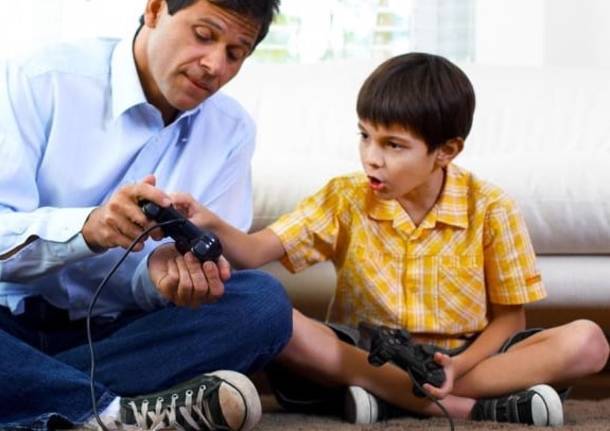
As parents vary greatly in terms of their nature, history and personal disposition, their attitudes towards videogames are also very diverse: some give them to their children when they are very young, others prohibit them.
Given this situation, specialists at the “Bambino Gesù” Children’s Hospital in Rome have prepared and published in the magazine “A scuola di Salute” some useful indications for mums and dads to help them use this form of entertainment while trying to prevent possible side effects.
Choices and effects
LABELS: there are two international reference labels: PEGI (Pan European Game Information) and ESRB (Entertainment Software Rating Board, which is American). Both can be found on videogame cases and they specify the age for which each is recommended.
AGGRESSIVENESS: “Almost all studies have shown that people who play violent videogames tend to behave in a violent manner,” paediatricians write, pointing out, however, that it is unclear whether this is due to the fact that more aggressive children choose more aggressive videogames, or whether, in some way, these videogames have the effect of accentuating the aggressiveness of those who play them. Aggressiveness that might be accentuated also by the frustration experienced during the game.
POSITIVE SKILLS: there are less aggressive videogames, which can help to develop positive skills in logic and mathematics. Others, which are played also, and above all, online, encourage cooperation, team work and problem-solving, empathy and communication.
Time
WHEN: avoid playing videogames in the evening, especially after dinner or before going to bed, because several studies have shown that this has a negative effect on the quality of the sleep and, consequently, on school results.
FOR HOW LONG: from WHO guidelines to Italian paediatricians, it is agreed that screens (including videogames) should not be given to children before the age of two, and then up to a maximum of one hour per day, for children aged between 2 and 6, and a maximum of two hours (including television) for school-aged children, from six upwards.
“Children have a limited ability to control impulses,” paediatricians say. “It’s normal for them to ask to play some more. It will be up to the adult to make them respect rules that have been previously agreed upon.”
Sharing
TRY OUT BEFORE OFFERING: a good way to choose a videogame to offer your children is to try it out personally, even before making it available to your child. In this way, it will be easier to assess the level of aggressiveness, frustration and potential.
SHARING: sharing the children’s experiences improves the relationship between parents and their children and, in this specific case, playing videogames together with the children can help in observing the effects, on the one hand, and, on the other, it enables the adult to guide the child in how to use the game and in how to manage emotions while it is playing.
Translated by Elisabetta Ciocca and Debora De Benedetto
Reviewed by Prof. Rolf Cook


Dalla Home

Basket
Kamagate affascinato dalla filosofia di Varese: “Qui posso migliorare con tutta la squadra”

Castellanza
Come è arrivato davanti alla clinica di Castellanza? Indagini in corso per capire chi ha ucciso il 41enne a colpi d’arma da fuoco

Gavirate
Ritrovato ad Olginasio l’anziano scomparso da Gavirate

L'analisi
Varese non è in declino, si sta sfilacciando
La community di VareseNews
Loro ne fanno già parte
Ultimi commenti
Felice su Ferito con un machete sul lungolago: agguato nella notte a Laveno Mombello
Fabrizio Tamborini su Ferito con un machete sul lungolago: agguato nella notte a Laveno Mombello
Felice su "Ciak si gira!", alla scuola Mazzini di Varese le riprese del nuovo film di Emanuele Mattana
lenny54 su Il sindaco di Besnate in Ucraina: «A Odessa problemi ordinari in una situazione straordinaria»
principe.rosso su Il sindaco di Besnate in Ucraina: «A Odessa problemi ordinari in una situazione straordinaria»
Felice su Ospedale di Comunità di Somma Lombardo ai privati, Astuti (Pd): "Decisione calata dall’alto, ulteriore colpo alla sanità pubblica"







Accedi o registrati per commentare questo articolo.
L'email è richiesta ma non verrà mostrata ai visitatori. Il contenuto di questo commento esprime il pensiero dell'autore e non rappresenta la linea editoriale di VareseNews.it, che rimane autonoma e indipendente. I messaggi inclusi nei commenti non sono testi giornalistici, ma post inviati dai singoli lettori che possono essere automaticamente pubblicati senza filtro preventivo. I commenti che includano uno o più link a siti esterni verranno rimossi in automatico dal sistema.