
In Switzerland one third of abortions is Italian
Out of a total of 628 abortions in 2008, 446 have used the pharmacological method, 229 the surgical method and 7 both the pharmacological and the surgical method. 206 Italian patients have crossed the border.
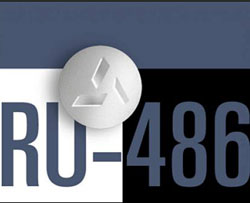 In Switzerland, the administration of RU486 pill (the abortion pill) has constantly increased since 1999, whereas surgical interventions have decreased. This information is very interesting for the province of Varese and the other areas that border with Ticino, because it seems that Italian women are those who are increasing these figures. This data has been given on the basis of statistics, therefore it does not lend itself to speculation, even though we have to specify that the administration of this drug in Italy has just begun.
In April 2008, it was this exponential increase in abortions in Ticino that urged some MPs of Ticino to ask for explanations from the Government in Bellinzona. Carlo Luigi Caimi, MP of the Christian Democratic People’s Party of Switzerland, asked the Council of State of Ticino if “they were aware of the fact that 613 legal abortions were performed in Ticino in 2007, and that 151 (i.e. 24.63% of all the voluntary interruptions of pregnancy) were carried out on women who came to Ticino just to abort legally, and that the abortion rate of foreign women is about twice as high as that of Swiss ones. What does the Council of State intend to do against the so called ‘abortive tourism’?”. The Council of State gave an answer to these questions stressing the fact that “the total number of the interruptions is stable. Whereas the number of foreign women, essentially living in Italy, who come in our Canton in order to interrupt the pregnancy is rising.
At the same time, in percentage, it is possible to notice an evolution of the division between the surgical approach and the pharmaceutical one. The latter, which guarantees a less traumatic intervention on women, is ever-growing.”
Ticino questions the other countries and itself, given that one third of the abortions have come from Italy. Let’s give some figures: out of a total of 628 abortions (both on Swiss and foreign women) in 2008, 446 have used the pharmacological method, 229 the surgical method and 7 both the pharmacological and the surgical methods. Among the 446 women, who have chosen the pharmaceutical method, 341 did that just through a visit to the doctor’s office (in hospitals, private clinics or private practices), 7 had to face hospitalisation and 98 did that at the day-hospital. The majority of those women are between 25 and 40 years old. If we study this data even more in detail, we find out that 206 Italian patients crossed the border in 2008. Among these, just 25 faced the surgical method, 180 preferred the pharmaceutical method and just one patient underwent both these abortion methods. The politicians of Ticino, not only the members of the Christian Democratic People’s Party, have tried to find some answers to this problem , which cannot just be to prohibit the use of the pill. The department for health and social issues of Ticino, through its secretary, the member of the Council of State Patrizia Pesenti, invites us to be careful and not to describe the situation as a social phenomenon. Most of all, she encourages us to look at the forms of prevention and information that Switzerland offers, starting from the family planning centres, important institutes, which help women and assist them in a path of personal choice, in one direction or in the opposite one but, it seems unnecessary to stress that, with a predilection for the “choice of life”.
This picture, which does not aim to be a simple cold list of figures, carries a number of stories with it, which are often full of pain and despair, of choices which can change one’s life. A final piece of data, together with direct evidence, tells us something about the privacy, discretion and quality of the institutions that host and give Mifegyne without staying in hospital, without queuing or filling in forms, with the possibility, for those who feel the need for it, to find their own place to think, if they wish. A place where they can cry, as someone told us, or just be alone and silent. As far as the “gynaecological tourism” is concerned, in the last few years the situation in Ticino has been strongly affected by the Italian rules, by the Law 40 of 2004 on fertilisation, to the ban on pharmacological abortion, which has now been overcome. In Ticino, like in Italy, the parties have expressed their opinions, however, obeying the principle of secularism that is in force in Switzerland, and that is in accordance with the opening words of the Constitution of 1291(“In the name of God…”), with those of the new Swiss Constitution, which begins with the phrase “In the name of Almighty God”, with the cross that stands out in the middle of the Swiss flag, with the Swiss national anthem, with the psalm celebrating the Christian God, and with the money in Switzerland; on the rim of a five-franc coin you can read “Dominus providebit”, that is “God will take care”.



Dalla Home
Lavoro
Lunedì 9 marzo sciopero generale indetto dai sindacati di base: non riguarda i trasporti

Malnate
Il ricordo di Laura Prati vive a Malnate: l’area verde davanti al Comune intitolato alla sindaca uccisa nel 2013

Varese
Corteo per l’8 marzo a Varese: in centinaia per i diritti delle donne

Busto Arsizio
Inaugurata a Busto Arsizio la 14ª edizione del Festival Fotografico Europeo
La community di VareseNews
Loro ne fanno già parte
Ultimi commenti
ClaudioCerfoglia su Come si capisce una guerra, giorno dopo giorno
anselmo piazza su Lavori in Viale Belforte, Via Marzorati e Via dei Campigli: a Varese senso unico alternato dal 24 al 30 agosto
Bustocco-71 su Cede la rampa della tangenziale, deviazioni tra Malnate e Varese
GianPix su Il varesino Marco Iemmi ha vinto il Premio Internazionale "Il Poeta dell'Anno"
Rocco Cordi su "Grazie Giorgio per quel nostro pezzo di strada percorso insieme"
Bustocco-71 su Lavori in autostrada A8 a Gallarate, per otto mesi carreggiata per Milano ridotta a due corsie






Accedi o registrati per commentare questo articolo.
L'email è richiesta ma non verrà mostrata ai visitatori. Il contenuto di questo commento esprime il pensiero dell'autore e non rappresenta la linea editoriale di VareseNews.it, che rimane autonoma e indipendente. I messaggi inclusi nei commenti non sono testi giornalistici, ma post inviati dai singoli lettori che possono essere automaticamente pubblicati senza filtro preventivo. I commenti che includano uno o più link a siti esterni verranno rimossi in automatico dal sistema.