
First report cards without grades in primary schools: a momentous change
Teacher Davide Tamagnini explains how the new formative evaluation of primary school children was born and how to read it
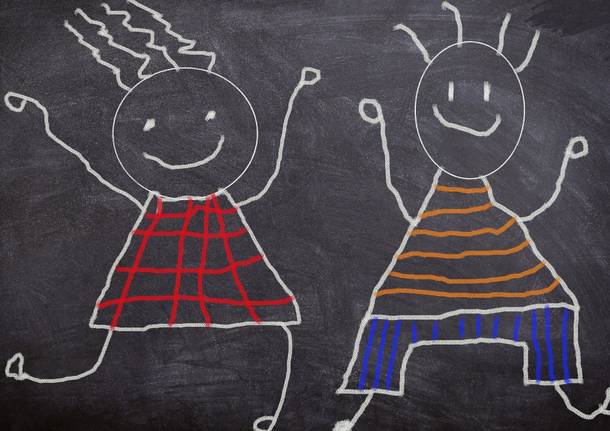
“I have never put grades on my students because they are not suitable for describing a child’s progress and, worse, they easily turn into labels,” explains teacher Davide Tamagnini, one of the spokespersons with Franco Lorenzoni of the Educational Cooperation Movement, which has strongly supported this small revolution: from 2021 (including the first four months of the current school year) primary school report cards will be without grades. And it’s not just a matter of changing the grading scale, as was the case in the past, with excellence represented by a 10, an A or a ‘very good’.
This time, together with the evaluation, “the very idea of the school is changing: it must not classify students, comparing them with grades in order to select the best and the worst, or lend itself to this selection,” Tamagnini explains. “Instead, the school must accompany each child on their path of growth and education so that each one achieves the skills identified by the Ministerial Directions, in force since 2012. The ministerial indications, almost 10 years ago, already replaced the old school programmes, leaving teachers free to take different paths to lead students to certain skills to be acquired over a long period of time: in primary school by the end of 3rd grade some, at the end of 5th grade others: “Finally, the evaluation system is also moving in this direction”, he says.
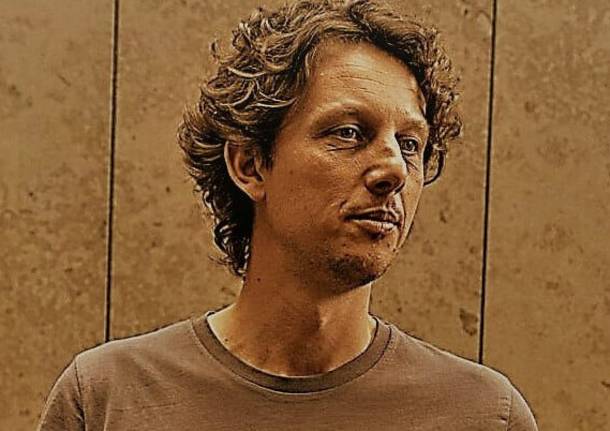
“The challenge is epochal”, he adds, “it’s about going from the old documented evaluation to a formative evaluation, for learning, as it is already clearly written in the ministry guidelines of 2012 which have been largely ignored until now. It is an evaluation that does not specify only what the student can and can’t do, but how he reached the gained knowledge, with which kind of work, through which personal path.”
According to Tamagnini, there are at least two critical aspects which risk jeopardizing the objective: the definition of levels and the little time that teachers have to adapt not only the report cards, but more generally their own teaching to the new regulations.
LEVELS
Basically, the parents who receive the report cards in these days find next to every subject a short indication about the learning path of knowledge, which can be “Advanced”, “Intermediate”, “Basic” or “in the process of first learning”, followed by a descriptive judgment that is based more generally on the child’s path during its evolution.
“If teachers while evaluating, and parents while reading this evaluation, will give in to temptation of equalizing these four learning levels to the previous scale rating from 1 to10 with a simple equation, we will betray the meaning of the rule and lose the occasion of giving back its social value to the school.”
TIMES
Our evaluation, which became law starting from December, is already operative with the report cards of the first term, which are given to children, or rather to the electronic record, during these days. “The truth is that such a radical change in the evaluation process needs some time to be understood, assimilated and put into practice, demolishing the old comparative and classificatory habits. The real challenge is to change the way of teaching and to take the necessary time to do it.”
FROM THE PARENTS’ POINT OF VIEW
“The Vulgate says that the grade is clear, but what does a 6 actually mean?” Tamagnini asked. “Do you know little, but what you know, you know well, or do you know everything, but you don’t know how to explain some things, or still do you know things, but you haven’t understood them very well? Formative assessment can say all this and more, with different phrases and words for each student, because each path is different from the other in arriving at knowledge. Doing without grades means to teachers describing the learning process of each student, also to parents, who will thus be more aware of it.”
Translated by Chiara Brovelli, Sara Mentasti and Vittoria Bonanomi
Reviewed by Prof. Robert Clarke


Dalla Home

Basket
Elisee Assui futuro in NCAA dall’estate. Horowitz: “Per lui una grande occasione”
Varese
Commissione Lavori Pubblici a Varese: il numero legale non c’è, la seduta dura solo due minuti

Olimpiadi 2026
Varese ai piedi della “coppia d’oro” del pattinaggio giapponese: Miura e Kihara trionfano alle Olimpiadi

Qualità dell'aria
VareseNews utilizza l’intelligenza artificiale per monitorare la qualità dell’aria
La community di VareseNews
Loro ne fanno già parte
Ultimi commenti
Giorgio Stucchi su Scuole Materne di Gallarate, scontro sulle rette e sulla “clausola aperta”
Mia23s su Esplosioni e fiamme in una fonderia a Lonate Pozzolo
Alberto Gelosia su Il tour per la legge sulla “Remigrazione” passa anche a Gallarate: interviene l’Anpi
Felice su In Svizzera si voterà per decidere se nel Paese debba esserci un tetto massimo di dieci milioni di abitanti
Felice su L'Italia come immenso bed&breakfast non ha un futuro
Felice su Superati i 3 milioni di presenze: turismo in crescita nel Varesotto e Varese Welcome lancia nuove idee








Accedi o registrati per commentare questo articolo.
L'email è richiesta ma non verrà mostrata ai visitatori. Il contenuto di questo commento esprime il pensiero dell'autore e non rappresenta la linea editoriale di VareseNews.it, che rimane autonoma e indipendente. I messaggi inclusi nei commenti non sono testi giornalistici, ma post inviati dai singoli lettori che possono essere automaticamente pubblicati senza filtro preventivo. I commenti che includano uno o più link a siti esterni verranno rimossi in automatico dal sistema.